Program
Proceedings are available online at http://ceur-ws.org/Vol-4205.
| Start | Speaker | Talk title | Slides |
|---|---|---|---|
| 09:00 | Workshop Organizers | Web of Data Quality Workshop Opening | |
| 09:05 | Marta Sabou, Vienna University of Economics and Business (WU), Austria | Keynote entitled “Human-centric Evaluation of Semantic Resources: Results from a Systematic Mapping Study” | Slides |
| 09:45 | Maruf Ahmed Mridul, Rohit Kapa and Oshani Seneviratne | A Benchmark for Gap and Overlap Analysis as a Test of KG Task Readiness | Slides |
| 10:00 | Marcelo Silva, Johannes Herrmann and Valerie Maxville | An Explainable Header-Centric Framework for Large-Scale Semantic Table Interpretation and Data Quality Assessment | Slides |
| 10:15 | Maria Angela Pellegrino, Anisa Rula, Lisa Ehrlinger, András Micsik, Blerina Spahiu and Lorena Etcheverry | Measuring What Matters: User Perceptions of Knowledge Graph Quality Dimensions in Cultural Heritage | Slides |
| 10:30 | Break | ||
| 11:00 | Patrick Lambrix and Ying Li | Position paper: Issues in Logic-based Repairing of Knowledge Graphs | Slides |
| 11:15 | Zenon Zacouris, Jin Ke and Maribel Acosta | Effects of Entailment in SHACL Validation of Closed Shapes | Slides |
| 11:30 | Robert David | A multi-layered Approach to cope with Recursion in SHACL Repairs | Slides |
| 11:40 | Sana Latif | A large-scale empirical analysis of FAIR compliance in biomedical KGs using KGHeartBeat and FAIR-Checker | Slides |
| 11:55 | Gabriele Tuozzo and Antonio Lieto | Towards Automated FAIR Compliance Diagnosis: Evaluating LLMs on Explanation and Diagnosis Questions | Slides |
| 12:05 | Ruben Dedecker, Ben De Meester and Pieter Colpaert | Context Associations: an Application-Independent Annotation Method for RDF Knowledge Graphs | Slides |
| 12:15 | Antonios Georgakopoulos, Paul Groth and Lise Stork | Ranking-Guided Autoregressive Modeling for Multimodal Tabular Anomaly Detection | Slides |
| 12:25 | Workshop Organizers | Web of Data Quality Workshop Closing Ceremony |
Keynote speaker
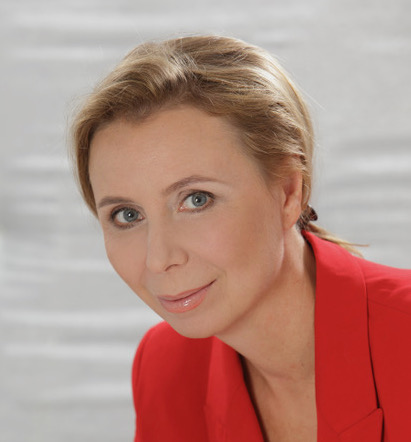 |
|---|
| Marta Sabou |
| Vienna University of Economics and Business (WU) |
| Austria |
Title: Human-centric Evaluation of Semantic Resources: Results from a Systematic Mapping Study
Abstract As ontologies and knowledge graphs increasingly power intelligent applications across diverse domains, ensuring their quality remains a critical challenge. While automated tools are useful, they often fail to capture quality criteria, for example, such as domain and modeling correctness, which require the nuanced assessment only human participation can provide. Despite the essential role of such human-centric evaluation of semantic resources (HESR), the field has lacked a unified theoretical framework and a clear overview of best practices. In this talk, we address this gap by introducing a new perspective that integrates existing literature into a comprehensive theoretical framework for defining and characterizing HESR. Furthermore, we will also present the results of a Systematic Mapping Study covering 144 papers published over the last 15 years, empirically grounding our framework and identifying key trends in this area. Attendees will gain valuable insights into current practices and leave with practical insights to improve evaluation activities in their own projects.
Short bio Marta Sabou is a professor for Information Systems and Business Engineering at the Vienna University of Economics and Business (WU) and the Head of Institute for Data, Process and Knowledge Management (DPKM). She holds a PhD in Artificial Intelligence from Vrije Universiteit Amsterdam, for which she received the IEEE Intelligent System’s Ten to Watch Award in 2006. During her career, she performed Artificial Intelligence (AI) research at the Open University UK, MODUL University Vienna, Siemens and the Vienna University of Technology. Prof. Sabou leads the Semantic Systems research group, which performs foundational and applied research on topics ranging from knowledge engineering (knowledge graphs and their evaluation, data integration) to the development of novel intelligent systems that combine both symbolic and sub-symbolic AI techniques, i.e., neuro-symbolic systems. Increasingly, the group addresses topics in the area of Digital Humanism such as the auditing of AI systems and the involvement of human stakeholders in the design of intelligent systems.
Link to the slides : Slides are available online on Zenodo. You can access them here.
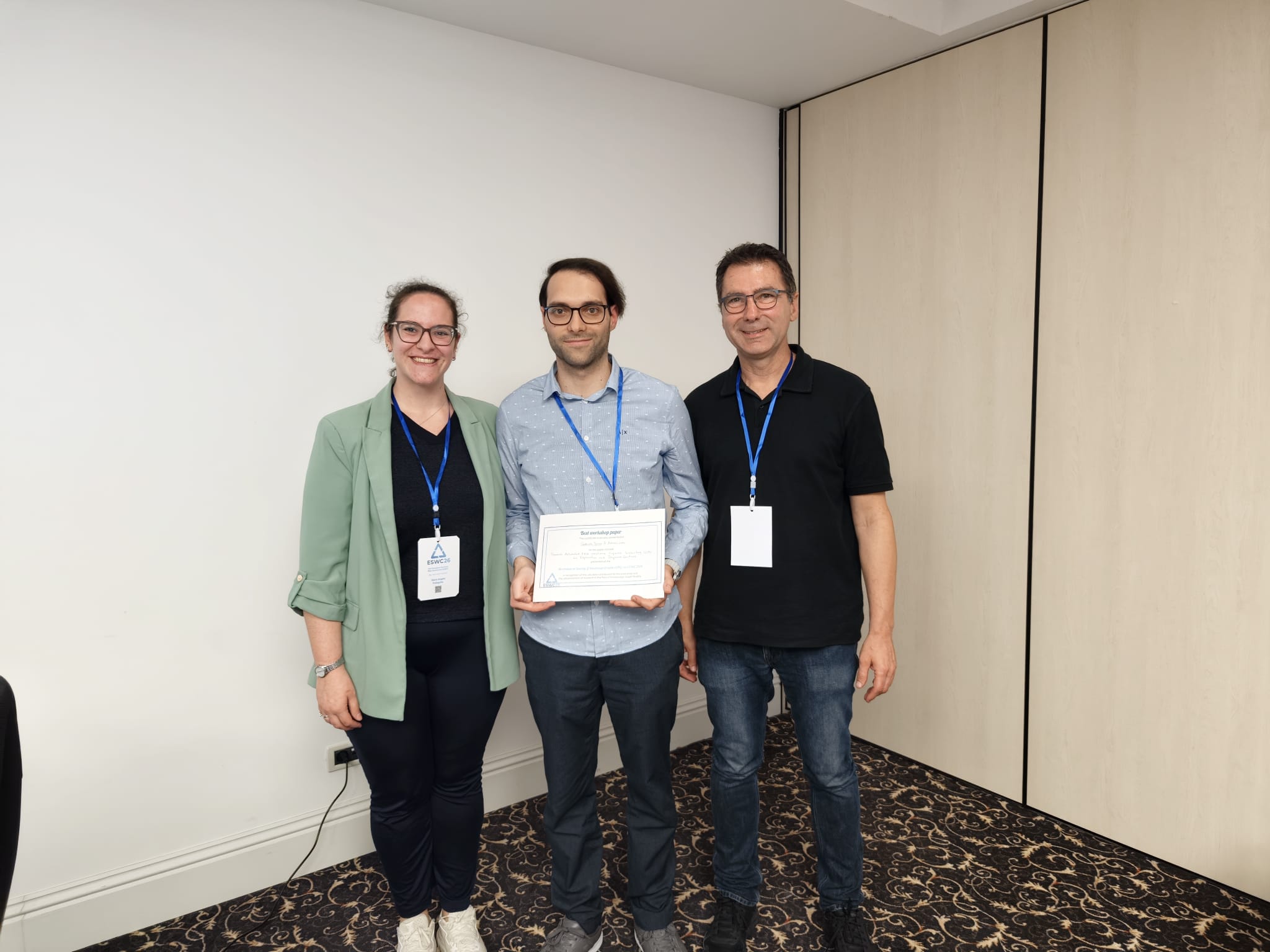
Best workshop paper The best workshop paper has been assigned to Gabriele Tuozzo and Antonio Lieto for their paper “Towards Automated FAIR Compliance Diagnosis: Evaluating LLMs on Explanation and Diagnosis Questions”. Congratulations!
Organization
Organizers
 |
 |
 |
|---|---|---|
| Maria Angela Pellegrino | Anisa Rula | Jose Emilio Labra Gayo |
| University of Salerno | University of Brescia | University of Oviedo |
| Italy | Italy | Spain |
Program Committee
- Gustavo Candela - University of Alicante, Spain
- Robert David - Vienna University of Economics and Business, Austria
- Ruben Dedecker - Ghent University, Belgium
- Lisa Ehrlinger - University of Potsdam, Germany
- Paul Groth - University of Amsterdam, The Netherlands
- Hazar Harmouch - University of Amsterdam, Netherlands
- Aidan Hogan - Universidad de Chile, Chile
- Ernesto Jiménez-Ruiz - University of London, UK
- Rohit Kapa - Prudential Financial, USA
- Omer Kilic - Maastricht University, The Netherlands
- Dimitris Kontokostas - Medidata Knowledge Graph, USA
- Ying Li - Linköping University, Sweden
- Antonio Lieto - University of Salerno, Italy
- Johannes Mäkelburg - Technical University Munich, Germany
- Stefano Marchesin - University of Padua, Italy
- Maruf Ahmed Mridul - Rensselaer Polytechnic Institute, USA
- Heiko Paulheim - University of Mannheim, Germany
- Marta Sabou - Vienna University of Economics and Business (WU), Austria
- Stefani Tsaneva - Vienna University of Economics and Business (WU), Austria
- Gabriele Tuozzo - University of Salerno, Italy
- Yasunori Yamamoto - Hokkaido University, Japan
- Zenon Zacouris - Technical University Munich, Germany
Call & Important dates
🎯 Topics of Interest
We invite contributions related to, but not limited to:
- FAIR data and Open Science practices
- FAIRness and Bias Detection
- Quality-aware data preparation, curation, and integration
- Knowledge Graphs Assessment & Refinement
- Metadata quality, provenance, and traceability
- Multimodal data quality and AI readiness metrics
- Domain-specific and general-purpose quality frameworks
- Explicability & Diagnosis (even via AI-driven approaches) Bias detection and explainability in data quality
- Industrial perspectives on Web of Data quality
🗓 Important Dates
- Paper submission deadline:
March 3, 2026March 10, 2026 - Notification of acceptance: March 31, 2026
- Camera-ready submission: April 15, 2026
- Workshop date: May 11, ESWC 2026
All deadlines are 23:59 Anywhere on Earth (UTC-12).
📝 Submission Guidelines
We welcome the following types of submissions:
- Full papers: up to 15 pages (excluding references)
- Short papers: up to 8 pages (excluding references)
- Position papers
- Negative results papers
Submissions…
- must be written in English
- must be anonymous
- must be formatted using the CEUR format
- should present original research, practical experiences, tools, datasets, or visionary perspectives related to Knowledge Graph and Linked Data quality.
Submission is handled via EasyChair.
All papers will undergo peer review by the Program Committee and will be published in the workshop proceedings.
At least one author of each accepted contribution must register and attend the conference to present.